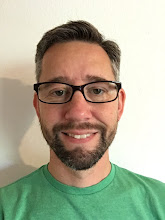
Finally I get some credit!
While I've been very happy researching and contributing to Rotary History and Archives' online and onsite history exhibits, it is nice when you get some recognition in a public way.
A few months ago, I researched the four men that met to form the first Rotary club in 1905 in Chicago. I also looked into the life of the so-called fifth Rotarian.
I wrote up my findings as a ready-reference document to assist researchers. Recently my coworker used that material in a regular web piece she does for www.rotary.org called Historic Moments. Since I wrote a significant portion of the finished product, she was able to get me a byline. Historic moment indeed! Hopefully this is the first of many.
Check out Historic Moments: The First Four to learn about Messieurs Harris, Loehr, Shorey, Schiele, and Ruggles. These four (OK, five) men met in an office after dinner one night, and the result is a service club organization that includes 33,000 clubs and more than one million members all over the world -- even in Antarctica.
We all start somewhere.
Showing posts with label Archives. Show all posts
Showing posts with label Archives. Show all posts
Tuesday, March 15, 2011

Monday, June 14, 2010
Digital Collection
 |
| Image by Dena Lamb |
We used photos and invitations from a family member, digitized them, and created a website to peruse and search them. We included some audio clips of the artist herself talking about her art as well. As part of the digitization process we decided what to show of each object, what information to include with each object, how to scan them, scanning specifications, and naming conventions. It was laborious and challenging but a lot of fun.
Take a look at the Dena Lamb Collection and see for yourself. If you're interested in finding out more about the artist, visit her online at Dena Lamb Images.
Friday, June 11, 2010
Penned by Paul
Working in an archive is great because I get to surround myself with old dusty books and artifacts. But even better is that I use those books and artifacts to answer questions and create learning experiences.
One recent project I worked on was the Life and Times of Paul Harris, an online exhibit about the founder of Rotary International. I was responsible for researching and creating a list of works written by Mr. Harris. What I found was that he wrote quite a lot, including two autobiographies, a history of the early days of Rotary, several travelogues, introductions to others' books, and more. I compiled the list, and then wrote brief descriptions about each one. The Web department took that and created the Penned by Paul page, which includes much of my original text and some images of Mr. Harris's handwriting.
The whole exhibit includes seven other pages of narrative following Harris as a young boy, a young man, a professional starting an international movement, and a husband. Everything was meticulously researched and well written by my colleagues in the History and Archives department.
During this experience I learned that while those old dusty books and artifacts are fascinating in and of themselves, it's what we do with them that makes all the difference. A good archivist organizes the objects so they can be accessed. A great archivists knows and uses the objects to create illuminating experiences.
One recent project I worked on was the Life and Times of Paul Harris, an online exhibit about the founder of Rotary International. I was responsible for researching and creating a list of works written by Mr. Harris. What I found was that he wrote quite a lot, including two autobiographies, a history of the early days of Rotary, several travelogues, introductions to others' books, and more. I compiled the list, and then wrote brief descriptions about each one. The Web department took that and created the Penned by Paul page, which includes much of my original text and some images of Mr. Harris's handwriting.
The whole exhibit includes seven other pages of narrative following Harris as a young boy, a young man, a professional starting an international movement, and a husband. Everything was meticulously researched and well written by my colleagues in the History and Archives department.
During this experience I learned that while those old dusty books and artifacts are fascinating in and of themselves, it's what we do with them that makes all the difference. A good archivist organizes the objects so they can be accessed. A great archivists knows and uses the objects to create illuminating experiences.
Subscribe to:
Posts (Atom)